To be human now is to live inside systems we have built without fully understanding them.
We have lived through ages shaped by singular transformations, from fire and language to the printing press, the industrial revolution, the splitting of the atom, and the internet, and each of these altered the trajectory of human life by changing what we could imagine, build, and become.
What defines our present moment feels different. It is not one transformation arriving on its own, but many arriving together. Biology is no longer only something we observe; it is becoming something we can read, write, edit, and engineer. At the same time, machines no longer simply compute; they learn, generate, reason, and increasingly participate in the work of knowledge itself. Meanwhile, medicine is moving from treating disease after it appears toward understanding risk, preventing illness, and potentially curing conditions once thought intractable, while energy, once drawn from the deep past of fossilized sunlight, is being reimagined through new technologies and the fundamental forces of the universe. Moreover, the frontiers of Earth, ocean, atmosphere, and space, once distant or abstract, are becoming closer, more visible, and part of the same human story.
Each of these stories matters on its own, but taken together they tell us something larger. We are living through a convergence of forces that are changing not only how we live, but what becomes of us.
That convergence is exhilarating, and it is also unsettling, because when a discovery appears in a lab, when a new intelligence model learns faster than expected, when a spacecraft sends back images from a place we once treated as unreachable, when a cell is edited, when the ocean reveals a hidden system of life, or when the atmosphere carries a new signal of planetary change, each of these events can seem isolated: a breakthrough here, a warning there, a strange capability somewhere else. Yet beneath the surface, we believe these signals are connected. They are part of a larger reordering of life, intelligence, society, and the planet itself.
The difficulty is that we have more information than any generation before us, and yet the world can feel harder to understand. We see more, measure more, and share more, but we do not necessarily understand what it all means.
T. S. Eliot once asked, “Where is the wisdom we have lost in knowledge? Where is the knowledge we have lost in information?” The question feels less literary now than practical. We are surrounded by signals, and the work is learning how to read them.
That is where The New Humans begins.
“The central challenge of this era is more than discovery. It is interpretation, agency, and action.”
We believe the central challenge of this era is more than discovery. It is interpretation, agency, and action; the ability to understand the forces shaping our lives and to decide what we should each do about them.
Science is no longer a specialist language spoken only inside laboratories, journals, and conferences. It has become the main language through which the future is being written. It shapes our health, our economies, our security, our creativity, our institutions, and increasingly, our sense of ourselves.
A society that cannot interpret the forces shaping it will struggle to govern them wisely. It will confuse novelty with progress and leave too many people watching the future happen to them rather than helping decide what that future should become.
The New Humans exists to help close that gap.
We are building a magazine and community for serious, curious people who want to understand what is unfolding, why it matters, and what can be done with that understanding. You do not have to be a scientist, philosopher, investor, or futurist to belong here. You only have to be curious about the great questions now moving from the margins of intellectual life into the center of everyday life.
Who are we becoming? How do we stay healthy in a world where biology is legible and programmable? How do we preserve agency as intelligence is distributed between humans and machines? How do we care for the planet that made us, from the living soil beneath us to the ocean systems that regulate life? How does the view from space change the way we understand Earth? And how do we make sure that scientific and technological progress deepens human life rather than narrowing it?
These questions cannot be answered by science alone, even though science is essential to answering them well. They require history, ethics, philosophy, culture, economics, politics, and lived experience. They require people who can move across boundaries, because the world itself does not organize itself according to our departments.
The human being is not an isolated object. We are part of a much larger network that spans scales: molecular, cellular, neural, social, planetary, and cosmic. To understand ourselves now, we have to learn to see those connections.
That is why The New Humans will look across life, intelligence, society, technology, Earth, ocean, and space. We will follow the scientists rewriting our understanding of biology, the engineers building new forms of intelligence, the physicians and founders changing care, the explorers mapping the ocean and cosmos, and the thinkers asking what all of this means for human life.
It is also why the name matters. In The Song of the Cell, Siddhartha Mukherjee describes new humans not as imaginary science-fiction counterparts, but as human beings altered to relieve suffering through science and technologies built with extraordinary labor, care, and ingenuity. That spirit is close to our own. The New Humans is not a fantasy of replacement. It is a way of asking how science, technology, and culture are already changing us, and how we might meet that change with more wisdom, agency, and humanity.
Life on this planet is held within a thin, living membrane, from the depths of the ocean to the upper reaches of the atmosphere and the vantage point of space. That recognition sits at the heart of our work. It lets us explore the human future unfolding within us alongside the planetary systems that make that future possible.
Still, the stories must remain human.
The best science writing is an act of translation done with respect for the reader and respect for the truth. It keeps the depth but removes the fog. It makes room for wonder without abandoning rigor. It invites people into complexity without offering easy conclusions.
That is the kind of journalism we want to practice.
We will not chase every headline. We will look for the stories that matter because they reveal a deeper pattern. Sometimes that will mean explaining a breakthrough. Sometimes it will mean returning to an old question with new tools. Sometimes it will mean slowing down long enough to see that several separate fields are converging into one larger story.
The future is already here, but it rarely arrives as a finished narrative. Instead, it arrives in fragments: a paper, a prototype, a clinical trial, a satellite image, a strange data point, a new risk, a new possibility. Our work is to gather those fragments and help make sense of them.
The New Humans is therefore more than a publication. It is a shared space for interpretation, a place where scientists, builders, physicians, artists, investors, explorers, students, and thoughtful readers can meet around the same questions. It is a home for essays, interviews, briefings, gatherings, and conversations, and a community for people who want to think more clearly about the age we are entering and act with more imagination, responsibility, and courage inside it.
In a world of abundant information, trust becomes essential. Trust is earned slowly, by doing careful work, telling the truth, acknowledging uncertainty, and refusing to confuse confidence with understanding.
That slow work matters, because the future will not be defined only by what we invent. It will be defined by how well we understand what we invent, how wisely we govern it, how broadly we share its benefits, and how fully we remain capable of choosing what becomes of us.
The New Humans is our attempt to begin that work.
Welcome.
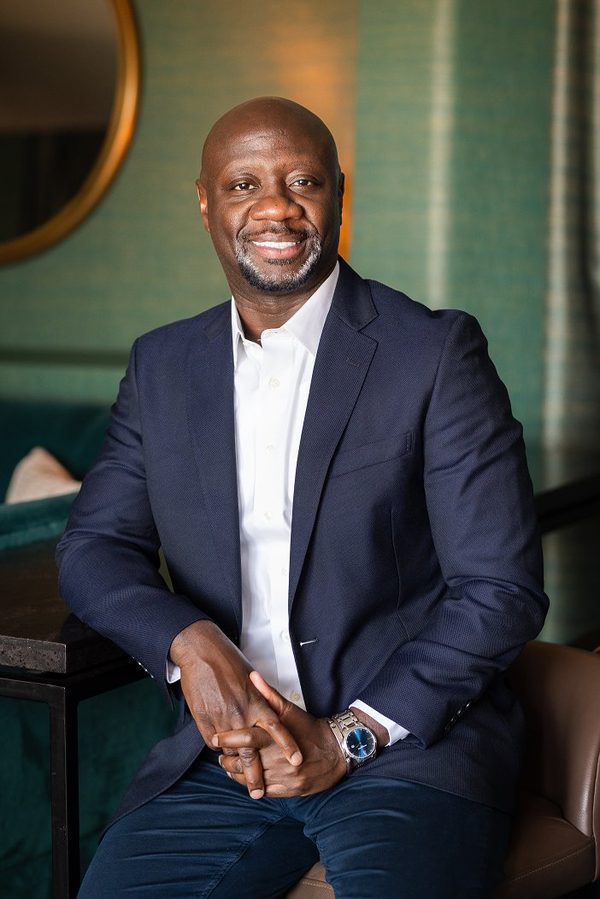
Felix Olale is the chairman and publisher of The New Humans. His writing explores the convergence of biology, intelligence, technology, and society, and the central question of our time: how humans flourish, retain agency, and evolve in an age of accelerating change.
Connect on LinkedIn →